
Why Microsoft and OpenAI are fighting
Plus, a free sneak peek at "The Girl at the Bottom of the Lake" which tells of a rift between worlds, a mysterious girl, and choices that could change everything.

Hey folks,
Having a very productive week! We streamed a commentary for the Apple announcement, which had its usual challenges of murky copyright policies, but ultimately was successful! Patrons of DTNS can watch it now on demand.
We also did a live Watch Along of the MTV VMAs AND a Daily Music Headlines round table. Big week!
I’ve got a couple of different things for you this week, partly because Top 5 is on hiatus for the moment. The first is an excerpt from the book “The Girl At the Bottom of the Lake.” I know some of you have been curious about the book but didn’t want to drop money on the paid tier without knowing a little more.
Also, I wrote up a background piece for DTNS on the Microsoft-OpenAI relationship to help folks understand their coming deal. It was more than we needed for the Friday episode, so rather than let it just sit on a hard drive, I figured I’d share it with y’all. Please let me know what you think of both of these!
What Is “The Girl At The Bottom of the Lake” about?
The Girl at the Bottom of the Lake is a story of grief, friendship, and impossible discovery. Kel is drawn again and again to the lake where his father once fished, only to find it hides more than memories — a rift between worlds, a mysterious girl, and choices that could change everything.
This week, (coming Saturday morning) paying subscribers get Chapter 15, which is a big turning point in the story. Here’s a sneak peek:
Rift Revelation
“ARGH!” Kel shouted, kicked off his shoes, tore off his white t-shirt, and dove into the water. He made straight for the area where the rift was. He felt the swelling emotion he always felt out here, along with a pounding in his head as he held his breath.
He knew exactly what was going on with Remy. Remy had a crush and was worried he was losing Kel. Remy had worked himself up for a big gesture of some sort and was scared, so when Kel shrugged off the invitation, Remy’s worst fears seemed confirmed, and he got mad as a defense.
The certainty about Remy got clearer as he swam. Kel wasn’t paying attention to his direction; he just swam toward the certainty. Suddenly, there was no more water, and he found himself tumbling out onto the grass.
If you want to try “The Girl at the Bottom of the Lake” from the beginning for free, here’s a 7-day free trial to the paid tier. Read as much as you want of it!
The Microsoft / OpenAI Deal
OpenAI and Microsoft have reached a deal to let OpenAI restructure. Why does Microsoft have a say in this? Why does OpenAI want to restructure? Tom Merritt dug in to tell us the back story.
OpenAI's corporate structure is a bit confusing if you don't follow it closely. OpenAI is a non-profit organization founded in 2015 that, in 2019, created a "capped-profit" subsidiary known as OpenAI Global LLC. The idea is similar to how Mozilla is a non-profit with a for-profit subsidiary that operates Firefox and other products. It lets OpenAI take investments that pay a return, instead of just grants, and then use that extra money to pay higher salaries to attract more talent.
But the cap on profits means any investor may only receive 100 times its investment. Which means not everybody who might otherwise want to invest will do it. Microsoft took the opportunity and invested more than $13 billion in OpenAI, in exchange for getting not only the capped profits but also preferred access to its newest models and 49% ownership in the for-profit LLC. Reportedly, there is a clause in that agreement that cuts off Microsoft's preferred access if OpenAI develops some definition of superintelligence.
While the capped profit structure helped increase investment, OpenAI needs more cash than it provides if it wants to keep growing. So, OpenAI would like to restructure to get rid of the cap on profits to investors, which would not only attract a wider number of them but also make it easier to list public stock. The current plan is to create a Public Benefit corporation. That's a type of corporation that has in its charter that it is committed to some kind of public benefit as a priority beyond just profits for shareholders. But it is still for profit and does not cap investor returns. Examples include Patagonia, Warby Parker, Kickstarter, and King Arthur Baking Company, among many others. To do all that, OpenAI needs Microsoft to agree to restructure its agreement.
And that brings us to the news from Thursday.
OpenAI and Microsoft reach tentative deal to revise partnership
OpenAI Realignment to Give Nonprofit Over $100 Billion Stake - Bloomberg
OpenAI and Microsoft Announce New Deal as the Startup Plans For-Profit Restructuration
A joint statement from OpenAI and Microsoft | OpenAI
OpenAI says nonprofit parent to own stake in company over $100 billion
OpenAI and Microsoft signed a nonbinding memorandum of understanding for a deal to restructure. That basically means both companies think they have a deal, but they need to iron out the actual legal details before they can sign off. While it could still fall apart, companies usually sign these deals as a sign they are confident the details won't get in the way.
Here's what the deal looks like. OpenAI's nonprofit parent company would remain, and would have control over the subsidiary as well as more than $100 billion stake in the public benefit company, which is estimated to end up being at least 20%. It's not unusual for a minority shareholder to have control of a company. It happens with founders all the time. It's a way to open up more shares for sale. There are a lot of ways to do it, but it usually involves some kind of nonvoting shares, etc.
The stake in a for-profit publicly-traded OpenAI LLC would, according to OpenAI chairman Bret Taylor, make it "one of the most well-resourced philanthropic organizations in the world."
There are no details on what they agreed on, but Microsoft wanted to continue to get preferred access and not lose value for its previous investments, of course. OpenAI wanted freedom to sign up to other cloud providers, which it recently did with Oracle. One can guess that OpenAI may have removed the clause about Microsoft losing its preferred access if superintelligence is reached, in exchange for some loosening of commitments to using Azure for OpenAI's cloud provider.
Once Microsoft and OpenAI hammer out the details, the restructuring will still need to be approved by the governments of Delaware and California, where OpenAI is incorporated. And OpenAI co-founder, Elon Musk, is also suing to stop the restructuring.
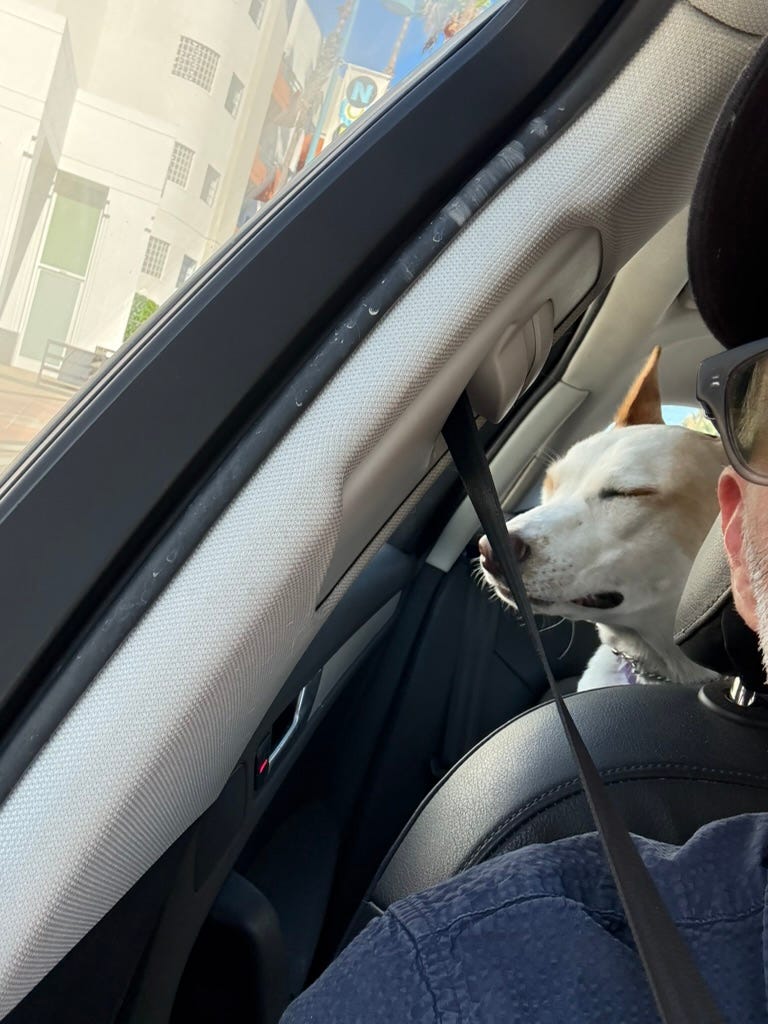
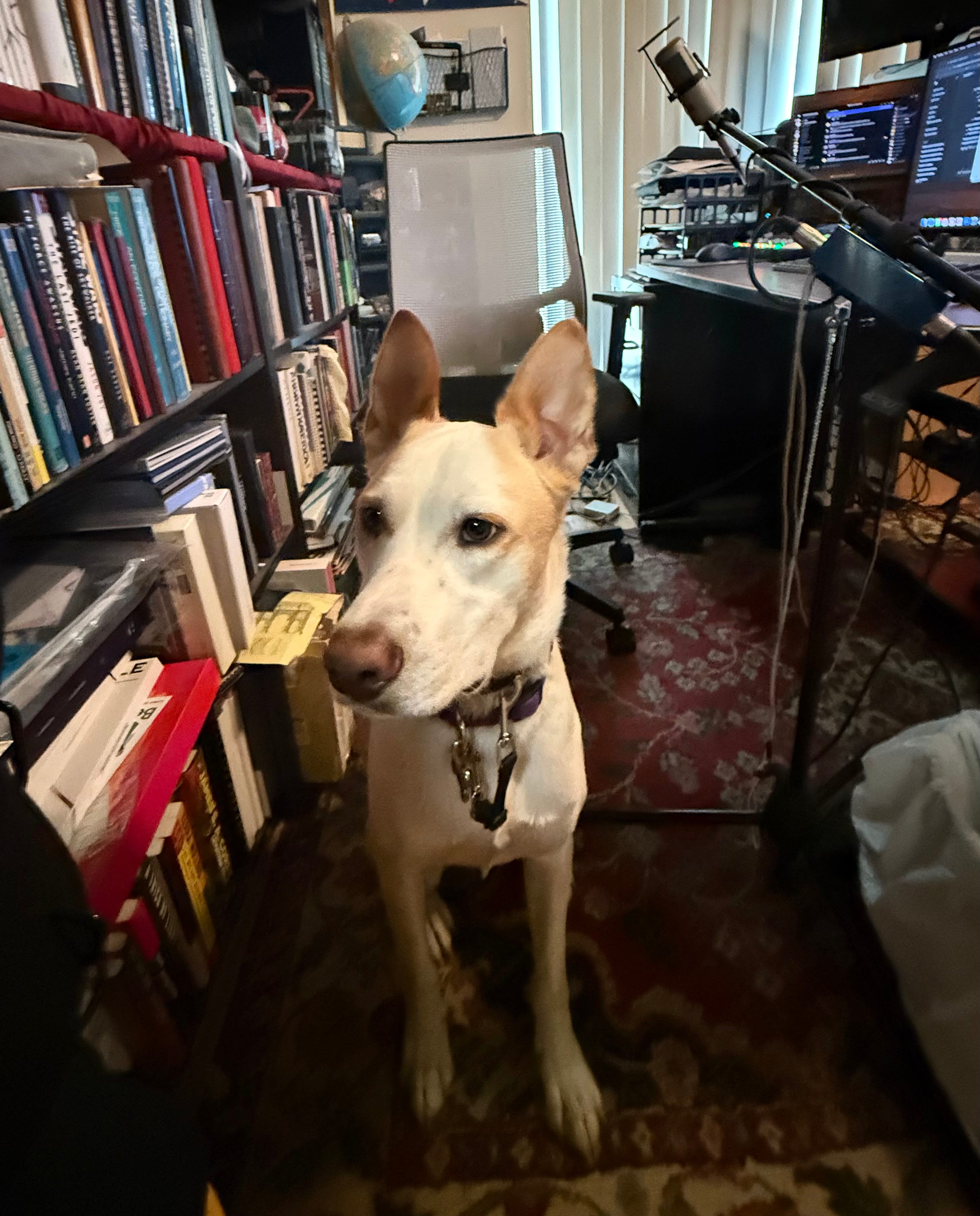
AND FINALLY, YOUR PICTURE OF SEVEN
Looking forward to reading the book! Is this Seven the Podcasting Dog? 10/10 would subscribe 🦮